


Planning for Growth — or Planning by Constraint? The M40 Corridor Needs a Bolder Vision
21 August 2026
The M40 changed the region
Thirty-five years after the completion of the Oxford–Birmingham section of the M40, the motorway has achieved precisely what major infrastructure investment is intended to do: it has transformed the economic geography of the region.
Banbury, Bicester and the wider M40 corridor have developed into important locations for manufacturing, logistics, automotive technology, advanced engineering, food production, defence-related industries and, increasingly, high-value technology businesses.
The challenge today is no longer attracting investment. It is finding sufficient, suitable and genuinely deliverable land on which that investment can take place.
That distinction is becoming increasingly important.
A Local Plan may identify substantial areas of theoretical employment land, but allocated land is not necessarily available land. Sites may already be developed, controlled by developers, constrained by infrastructure, subject to planning applications or simply unsuitable for a company's particular operational requirements.
Cherwell's own emerging plan evidence illustrates the point. Of five principal retained employment allocations originally extending to approximately 131.5 hectares, only 37.63 hectares remained without planning permission at February 2024.
The gap between planning and delivery
This highlights a growing disconnect between national planning ambition and regional planning delivery. The National Planning Policy Framework says that planning should be genuinely plan-led, provide a positive vision for the future, and that plans should be prepared positively in a way that is both aspirational and deliverable. It also requires strategic policies to provide sufficient land for homes, employment, commercial development and supporting infrastructure.
Importantly, the NPPF's economic objective is to ensure that sufficient land of the right type, in the right places and at the right time is available to support growth, innovation and productivity.
That is exactly where regional planning needs greater boldness.
Too frequently, the system appears to have evolved from strategic planning into development control: managing individual applications, constraints and competing pressures rather than looking 20 or 30 years ahead and asking what land, infrastructure, housing and employment space a successful regional economy will actually require.
The issue is equally relevant to housing.
Planning for the next 35 years
Bicester alone has previously accommodated strategic allocations for more than 10,000 homes alongside substantial employment growth. Yet some strategic residential developers active across the northern part of Oxfordshire are becoming increasingly concerned about the visibility of the next generation of significant housing allocations and whether the planning system is being sufficiently positive about where growth will be accommodated through to 2042.
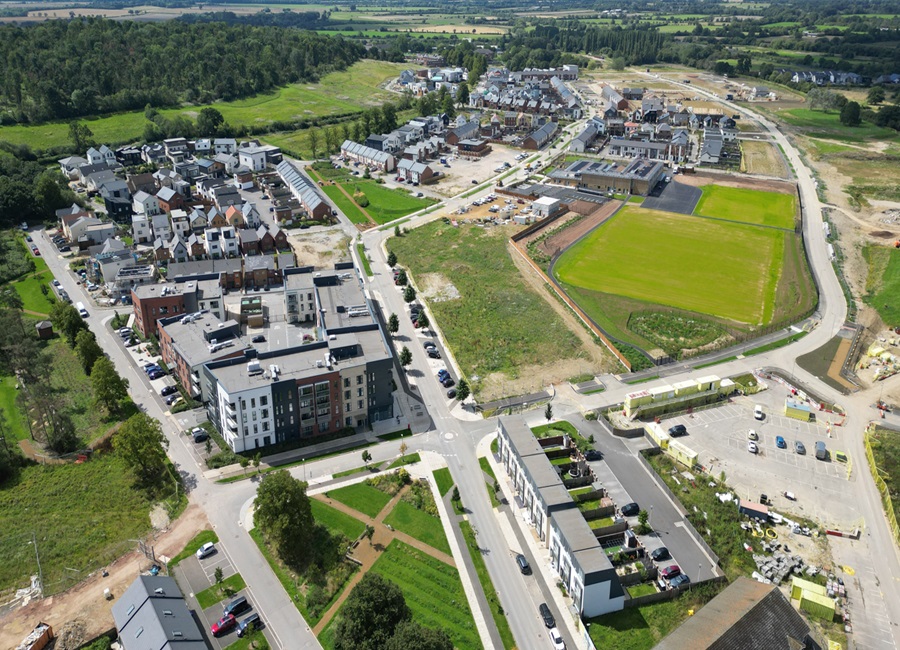
Developers, investors and infrastructure providers require certainty. Large residential communities cannot simply be switched on when today's allocations are exhausted. Land assembly, promotion, planning, highways, utilities, schools and other infrastructure can take many years to deliver.
The same applies to commercial development.
It should be a fundamental principle that a developing region such as the Northern M40 corridor recognises the importance of 'place' in economic development.
Strategic and Local Planning Authorities need to plan for a future that recognises the critical importance of:
- Creating an environment and sense of place that promotes quality of life, attracts talent and entrepreneurship, and encourages local businesses.
- Creating places where workers, entrepreneurs and businesses want to locate, invest and expand.
- Providing the amenities and infrastructure needed to attract and retain talented workers and entrepreneurs, as well as national, regional and local businesses.
- Creating economic wealth and employment, supported by effective health, policing and public authority services.
This also means enforcing quality design and placemaking while incorporating proper environmental protection.
Good strategic planning is about making choices but making them early enough and boldly enough to matter.
North Oxfordshire and the wider M40 corridor remain exceptionally well placed for future investment. The opportunity is therefore considerable.
The positive conclusion from the first 35 years of the M40 is that we already know what well-planned strategic infrastructure can achieve. The next challenge is to apply the same long-term thinking to land.
Housing and employment should not be regarded as competing interests. Successful businesses need employees; employees need homes; and both require infrastructure and thriving communities.
The next generation of Local Plans should therefore do more than control development. They should actively create the conditions for it, identifying and protecting sufficient residential and commercial land well ahead of demand and giving investors, developers and businesses the confidence to continue investing in North Oxfordshire.
The first 35 years of the M40 demonstrated the power of strategic infrastructure. The next 35 should demonstrate the power of strategic planning.

Chris White
Managing Director

Harvey White
Commercial Property Advisor